

New datasets, AI-based climate reanalysis, climate projections and the second annual climate monitoring report further strengthen Roma Climate Hub as the reference platform for climate adaptation in Rome.
The technical and scientific collaboration between Roma Capitale and the CMCC Foundation continues with the release of the 2025 Climate Monitoring Report and an enhanced version of the dedicated climate monitoring service, available through the Dataclime platform, Roma Climate Hub. Together, the report and the platform provide an updated assessment of Rome’s climate conditions, combining annual monitoring results with interactive maps, indicators and climate datasets to support the implementation of the city’s Climate Adaptation Strategy, approved by the City Council in January 2025.
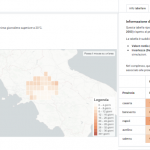
Over the past year, Roma Climate Hub has been significantly upgraded with a redesigned interface, new datasets and additional analytical tools, making climate information easier to explore and interpret. The platform continues to integrate observations, satellite data and very high-resolution climate reanalyses developed by CMCC.
Several new features have been introduced in this second monitoring cycle. The platform now integrates FAIR (Fast AI Reanalysis), CMCC’s AI-based climate reanalysis service, providing near real-time, very high-resolution climate information for Italy. A new catalogue of extreme events allows users to explore heat and cold extremes, heavy precipitation and extreme wind events across Rome. The satellite section has also been expanded to include a first assessment of climate change impacts on the marine environment along the Roman coastline. In addition, a new section dedicated to climate projections to the 2050 horizon, based on the high-resolution VHR-PRO_IT dataset developed by CMCC, enables users to explore future climate scenarios at the urban scale.
The 2025 Climate Monitoring Report confirms the persistence of warming trends across Rome. The analysis identifies 2025 as the third hottest year since 1991, surpassed only by 2024 and 2022, and includes a first assessment of sea surface temperature along the Roman coastline, highlighting a persistent warming trend over the last decade.
These findings highlight the value of continuous climate monitoring. Tracking climate conditions year after year makes it possible to detect emerging trends, understand how the climate is evolving across Rome and support urban planning, climate risk assessment and the evaluation of adaptation measures over time.
To learn more about the Climate Monitoring Service and the collaboration between CMCC and Roma Capitale, watch the video on the CMCC YouTube channel:
Maps and charts are available for free download via the Dataclime platform, offering a valuable resource for anyone interested in studying climate change across Rome’s municipal territory. Users are advised to consult and comply with the disclaimer associated with the use of results, to ensure correct and informed application.